


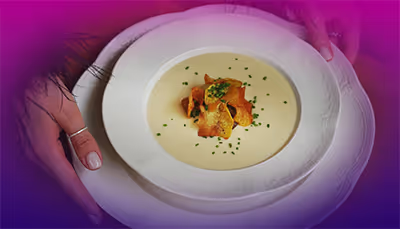
There's something fascinating about soup—it's been around for at least 20,000 years, and every bowl has a tale to tell.
Take the minimalist approach of Asian and French cuisines with their clear, simple soups like miso, egg drop, or classic consommé. These soups may look effortless, but they require real patience and technique—stripping ingredients down to their essence while coaxing out maximum flavor. That simplicity speaks volumes about culinary philosophy and restraint.
There’s the universal comfort of noodle soups. Scientists have studied why pho, ramen, and chicken noodle soup make us feel so good. The combination of hot liquid, salt, and easily digestible carbohydrates triggers multiple comfort responses, a story about human biology meeting culinary tradition.
The cultural geography of soup reveals even more. Cold-climate countries developed thick, calorie-dense versions—Scandinavian pea soup, Russian borscht, Canadian split pea. Mediterranean regions created lighter options like Italian stracciatella or Spanish gazpacho. Each culture's soup evolved from available ingredients and climate, proving that combining ingredients in hot liquid creates something greater than the sum of its parts.
And holiday turkey soup? No two batches ever taste the same. Each family's leftovers tell their own story of what was on the table, what mattered, who gathered around it.
From cultural traditions to family favorites, every soup carries history, geography, and memory in a bowl. Now that's storytelling at its finest.
There's something fascinating about soup—it's been around for at least 20,000 years, and every bowl has a tale to tell.
Take the minimalist approach of Asian and French cuisines with their clear, simple soups like miso, egg drop, or classic consommé. These soups may look effortless, but they require real patience and technique—stripping ingredients down to their essence while coaxing out maximum flavor. That simplicity speaks volumes about culinary philosophy and restraint.
There’s the universal comfort of noodle soups. Scientists have studied why pho, ramen, and chicken noodle soup make us feel so good. The combination of hot liquid, salt, and easily digestible carbohydrates triggers multiple comfort responses, a story about human biology meeting culinary tradition.
The cultural geography of soup reveals even more. Cold-climate countries developed thick, calorie-dense versions—Scandinavian pea soup, Russian borscht, Canadian split pea. Mediterranean regions created lighter options like Italian stracciatella or Spanish gazpacho. Each culture's soup evolved from available ingredients and climate, proving that combining ingredients in hot liquid creates something greater than the sum of its parts.
And holiday turkey soup? No two batches ever taste the same. Each family's leftovers tell their own story of what was on the table, what mattered, who gathered around it.
From cultural traditions to family favorites, every soup carries history, geography, and memory in a bowl. Now that's storytelling at its finest.