


"Trust your gut" is one of the most common pieces of advice in business and in life. As it turns out, science has a more complicated answer.
Most people assume that gut feelings originate in the gut whereas researchers say emotions are generated in the brain, not the stomach. Despite the gut's remarkable complexity, there is little scientific evidence that physical sensations arising from it provide a reliable basis for decision-making, or that acting on them leads to more successful outcomes.
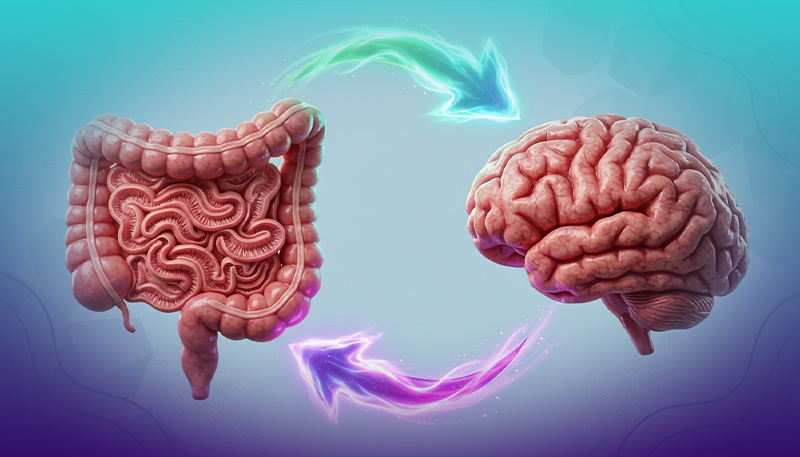
What science has confirmed is that the gut-brain connection itself is extraordinary. Nicknamed ‘the second brain’, the gut contains more than 500 million neurons, and the vagus nerve serves as a constant two-way communication between the two. This unique partnership actively influences mood, cognition, sleep, immune function and metabolism in ways researchers are only beginning to fully understand.
Gut health is worth paying serious attention to, even if not for the reasons the popular phrase implies. A plant-heavy, fiber-rich diet that includes fermented foods and omega-3 sources supports the gut microbiome and, in turn, the gut-brain connection. It’s not a quick fix, but the long-term benefits extend well beyond digestion. Science is only just beginning to decode the gut-brain relationship, and what researchers are uncovering is already very compelling.
READ: IS IT REALLY ‘GUT INSTINCT?’
"Trust your gut" is one of the most common pieces of advice in business and in life. As it turns out, science has a more complicated answer.
Most people assume that gut feelings originate in the gut whereas researchers say emotions are generated in the brain, not the stomach. Despite the gut's remarkable complexity, there is little scientific evidence that physical sensations arising from it provide a reliable basis for decision-making, or that acting on them leads to more successful outcomes.
What science has confirmed is that the gut-brain connection itself is extraordinary. Nicknamed ‘the second brain’, the gut contains more than 500 million neurons, and the vagus nerve serves as a constant two-way communication between the two. This unique partnership actively influences mood, cognition, sleep, immune function and metabolism in ways researchers are only beginning to fully understand.
Gut health is worth paying serious attention to, even if not for the reasons the popular phrase implies. A plant-heavy, fiber-rich diet that includes fermented foods and omega-3 sources supports the gut microbiome and, in turn, the gut-brain connection. It’s not a quick fix, but the long-term benefits extend well beyond digestion. Science is only just beginning to decode the gut-brain relationship, and what researchers are uncovering is already very compelling.
READ: IS IT REALLY ‘GUT INSTINCT?’