


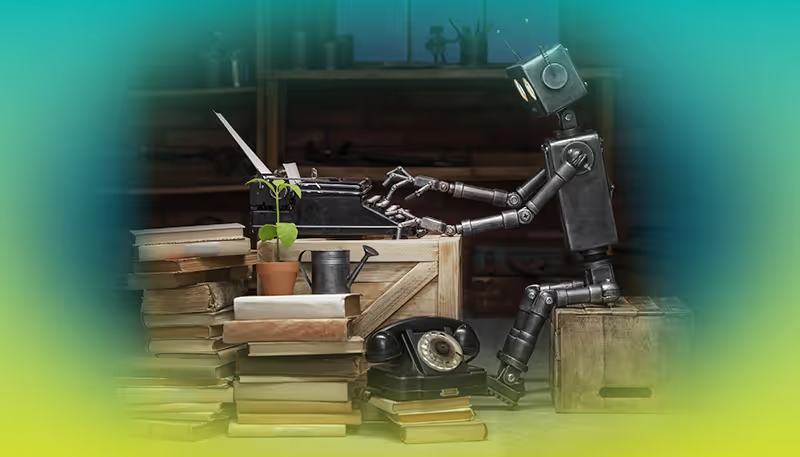
You post a thoughtful update or send a carefully worded email, and someone responds with "Did AI write this?" It's an awkward question that's becoming more common across every industry, and depending on the profession, it can quietly undermine credibility.
So why does it land the way it does? According to psychologist Stephanie Steele-Wren, the remark implies a lack of originality, a sense that the real person isn't coming through. In any profession where relationships and trust matter, that's a meaningful critique whether it was intended that way or not.
And what are people actually picking up on? AI-generated writing has recognizable patterns: overly tidy structures, paragraphs with three short phrases stacked beneath each other, social media posts that end with a recognizable formatted question, and EM dashes. The irony is that thoughtful, well-edited writing can trigger the same suspicion.
So where does that leave us? There are no established norms around disclosure yet, and most organizations are still working it out. If you find yourself on the receiving end, experts suggest keeping your response simple: "That's just what happens when I take my time with words." We're all navigating a moment where the line between human and machine communication is genuinely blurry, and a little confidence in your own voice goes a long way.
You post a thoughtful update or send a carefully worded email, and someone responds with "Did AI write this?" It's an awkward question that's becoming more common across every industry, and depending on the profession, it can quietly undermine credibility.
So why does it land the way it does? According to psychologist Stephanie Steele-Wren, the remark implies a lack of originality, a sense that the real person isn't coming through. In any profession where relationships and trust matter, that's a meaningful critique whether it was intended that way or not.
And what are people actually picking up on? AI-generated writing has recognizable patterns: overly tidy structures, paragraphs with three short phrases stacked beneath each other, social media posts that end with a recognizable formatted question, and EM dashes. The irony is that thoughtful, well-edited writing can trigger the same suspicion.
So where does that leave us? There are no established norms around disclosure yet, and most organizations are still working it out. If you find yourself on the receiving end, experts suggest keeping your response simple: "That's just what happens when I take my time with words." We're all navigating a moment where the line between human and machine communication is genuinely blurry, and a little confidence in your own voice goes a long way.